
Dubai Aquarium Learning Guide: What Kids Can Look for in the Tunnel
In this guide
Give the aquarium visit a question
Dubai Aquarium & Underwater Zoo in Dubai Mall can be a place to learn how animals move, hide and find food. Start with one question that a child can answer by looking. How does a ray move? Why do some fish stay close together? Where does an animal go when it wants to hide? Bring that question into the tunnel and find a second one upstairs.
This Dubai Aquarium learning guide gives a family a way to explore without turning the visit into a test. You can use the questions in any order. Pick a few, leave time for a quiet look and let each child decide which animal to watch. If a child wants to stay with a single window for longer, that can be the most rewarding part of the outing.
Use the Dubai Aquarium ticket listings to check which areas are included. The aquarium’s official visitor guide places the tunnel on the ground level of Dubai Mall and the Underwater Zoo on level two. Check the route, the latest opening details and any conditions for your ticket before going.
Start with an observation and then read
Ask a child to say what they see before telling them the name of an animal. They might notice a flat body, a long tail or a fish that stays near the bottom. Once they have a detail in mind, look for the sign. Read the name and see whether there is something about where the animal lives or what it eats. Compare the sign with what you can see right now.
An adult can use the same method. Begin with a feature you can describe and ask what it might help the animal do. If you cannot tell which animal you are seeing, ask a staff member at a suitable time. There may be several kinds of fish close to the same window. A description of colour, size and position helps someone understand which one you mean.
Encourage children to change their minds when they see more. A fish might look as if it is staying still until they notice a small fin moving. Another animal might appear alone until the rest of its group comes into view. Give the child time to look again. That is how a short visit can become a real observation of an animal.
Look for different kinds of movement in the tunnel
Compare a ray and a fish with a narrow body
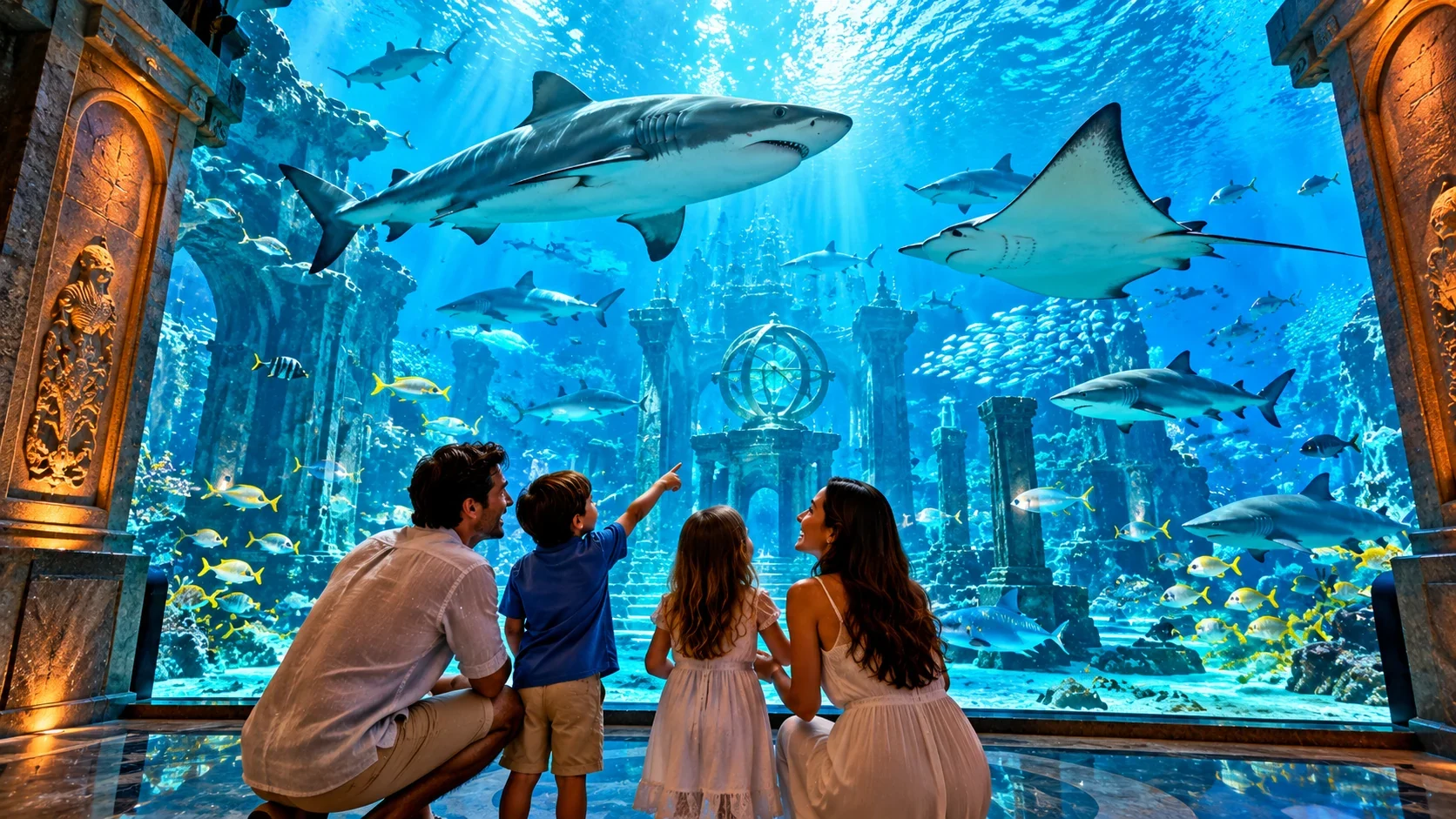
If you see a ray, look at the sides of its body and see how they move. Some rays move with broad fins that look like wings in the water. Compare that with a fish whose body is much narrower. Look for the tail or fins it uses as it turns. Different kinds of fish can use their bodies in different ways.
Ask each child to make a small hand motion to show the movement they saw. Someone might move their hand like a wave. Someone else might move it from side to side. Keep the activity close to your body and away from the wall or other guests. A simple movement can help a child remember the difference after you leave.
Try watching the same animal when it is going straight and when it changes direction. See if a different fin moves or if the body tilts. Give yourself time to see one complete turn. If it disappears, watch what happens around it and let another animal catch your attention.
Watch where animals choose to swim
Look at the tank from the part of the path where you are allowed to stop. Notice which fish are close to the surface and which are lower down. Watch whether the same fish stays at one level or moves. A child can pick one animal and say whether it is above them, beside them or near the bottom.
Repeat from another permitted place when the path is clear. You may see the same part of the tank from a new angle. Ask what is now easier to see. The shape of the viewing space can change the way an animal looks, especially when it passes above you. Keep the group moving if other people need to get past.
If you see several fish moving together, choose one detail about the group. Does the space between them change when they turn? Do they move in a long line or spread out? You can watch the pattern without counting every fish. Compare it with another group if one comes into view. The aim is to notice a change you can describe.
Pause when the view gets busy
Give people who are shorter a chance to see from their own height. If the path is crowded, move on to an open viewing point and look from there. A child can keep a question in mind as you walk. Look for a new angle that helps answer it. Let the group know before moving so everyone stays together.
Choose a quiet place to discuss what you noticed. If a child is excited, ask them to tell you one detail at a time. If an adult wants longer with a display, agree where the others can wait. Staff can help if you need to find a clear space where people can gather without blocking the route.
Check for signs about photos and equipment. The aquarium permits personal photos and video and marks areas where flash is prohibited. Follow the current signs and staff instructions. Turning flash off before starting is an easy way to avoid using it by mistake in a restricted area. Take a short picture and then let others enjoy the view.
Compare habitats in the Underwater Zoo
Read a display like a small map
The official visitor guide describes Rainforest, Rocky Shore and Living Ocean areas upstairs. When you reach a display, look for clues about the place it represents. Is the animal in open water, near plants or next to a rocky surface? A child can choose one feature and say what it might offer an animal. Then look at the label for more detail.
Ask where an animal might go if it wanted to be less visible. Look for shade, shapes or places that break up a clear view. You can often see more if you let your eyes settle before looking for movement. If an animal is out of sight, use the display and its label to learn what you can and move on when the group is ready.
A first-time visitor may expect every animal to be in sight. The animals can move around their habitats. Use that as a chance to practise looking. Notice what you see near the edges of a display and what changes when you stand a little farther away. You may find something you missed in the first few seconds.
Look for differences in body shape and colour
Pick two animals with shapes you can describe. One may have a broad body. Another may be long and thin. Try to say what part of the body first caught your eye. Then read the label and see whether it helps explain the shape or gives you another question.
Look at the colours in the display as a whole. An animal might stand out in one part of a habitat and blend in with another part. Move your eyes around before you move your feet. Look for an edge or a pattern that shows where the animal begins. You may also see a reflection from behind you, so take a moment to tell it apart from what is inside.
Ask one child to describe a detail without naming the animal and let another guess where it is. Keep the clues short. Say whether it is high or low and what kind of shape it has. When the other child finds it, swap jobs. This gives each child a reason to keep looking and a turn to share something they noticed.
Use the label when a question gets tricky
Children may want to know what a shark eats or whether an animal sleeps. The label may give you a starting point. Read what it says about that animal and then ask staff if a question is still open. You can save a question to look up later if the area is busy. Keep the animal’s name in your notes so you can find the right answer.
A good follow-up question can be about something you actually saw. For instance, you may have watched a fish move toward a rocky corner. Ask whether that behaviour is typical for the animal or whether it could have been doing something else. A single observation gives you a reason to look again, even when the exact explanation is uncertain.
Make room for an answer that depends on the animal. Some animals with similar shapes can live in different places or behave differently. If two children noticed different things, give each person a chance to explain where they were standing. Comparing their views can help them see how a description comes from what they saw.
Keep the learning activity small enough to enjoy
Choose one prompt for each stop
You can make a three-stop plan on the way in. In the tunnel, look for a difference in movement. Upstairs, find a place where an animal might hide. At the last window, ask each person to pick a favourite detail. Three short prompts can be enough. Let the group choose when it wants to move on.
For a younger child, use questions with simple choices. Which animal is closer to the window? Which one is moving more slowly right now? Can you see where the shadow starts? An older child can compare what the two animals do and check the label to see what else might matter. The questions can change with the age of the group.
Avoid asking everyone to finish at the same speed. One child may want to keep watching while another moves to a clear space with an adult. Agree when to meet. A short break can help the family look again. Read our Dubai Aquarium with kids guide for more ideas on how to pace the visit.
Let a child explain one thing in their own words
At the end of the visit, ask what they would show someone who has never been. They might describe an animal going over the tunnel or a detail from an upstairs display. Let them use simple words first. If they want to add the animal’s name, help them find it in their notes or a photograph of a sign if photos were allowed.
You can ask them to draw a shape or show the movement with their hands when you sit down. It is an easy way to remember the visit without needing to write a report. Another person can share a different detail. Leave space for an answer that surprises you. A child may remember the small fish you walked past rather than the largest animal you saw.
If you plan to return, save the question the child wants to ask next time. They might want to compare two fish or find a display they did not reach. Give that question a place in your trip notes. A later visit can start with something they chose, even if the route or displays have changed.
Decide what to book around the aquarium
Check the ticket before making a route
Read the areas and experiences named on the ticket. A family that wants the tunnel and an upstairs visit should check both before buying. If a boat ride, presentation or another activity matters to you, confirm the conditions and timing for that exact option. You can compare the site’s Dubai Aquarium ticket tiers guide with current operator details.
The official visitor guide says re-entry is unavailable. Plan any meal, restroom break or other mall stop around the conditions on your ticket. Ask at entry if you are unsure where your route ends. Give the aquarium enough time so a later booking does not make everyone hurry through the part they came to see.
If the family has people arriving from different parts of Dubai, choose a meeting place before entry. Use the exact level and a named landmark. Check how much time each person needs to get from the station or drop-off. A short message with the start time and meeting point is easier to follow than several screenshots.
Choose a simple stop afterward
Find a place where the group can sit and talk about what it saw. If the children still have energy, let them choose one detail from the outing to draw or describe. If everyone is tired, keep the return easy. You can do another attraction on a separate day. For plans that include the tower, see the Burj Khalifa and Dubai Aquarium day guide.
If someone in the group would like a different sort of aquarium visit, look at the Lost World Aquarium guide. That venue is on the Palm. Give it its own transport and ticket checks. A family can carry the same way of looking into a different setting and see what new questions come up.
Review the day when you get home. Ask which part was easy to find and where you needed more time. Note whether there was a good place to pause. If you want to try another large attraction, these details can help you make a better plan. See our mixed-age family ticket guide for ways to choose activities that suit more than one age.
Try a sample visit with three short stops
Imagine two adults and two children have a ticket for the tunnel and Underwater Zoo. Before entering, the children choose one job each. The first wants to find an animal that moves its fins like wings. The second wants to spot a fish that is hard to see at first. The adults check the route, keep the tickets ready and plan where to meet if someone needs a break.
In the tunnel the family waits at a permitted viewing point and watches the animals go past. The first child sees a ray and describes how it turns. The family moves on when the path gets busy. Upstairs they choose one display with enough room to look. The second child notices a shape near the back and reads the sign with an adult. They keep one more question for later.
The family leaves enough time for a quiet look before the end. Each person says one thing they saw. One adult wants to remember the way a fish moved. A child wants to draw the shape of a fin. The family sits down after the visit and chooses a picture to keep. They can all remember a detail because they spent time looking together.
Change the plan when the group needs a break
If someone gets tired early, choose one final thing to see and follow the venue’s exit directions. Tell the child what you will do next. If your group wants to stay and the ticket allows it, ask staff where you can pause. A short rest can help a guest who has spent a long time standing.
For visitors with access needs, ask about the actual route before buying. Check where there are lifts, where you can rest and whether any optional experience has separate conditions. Tell the venue what kind of help your guest needs. Plan one or two stops that everyone can enjoy, and save the extras for the people who want them and can take part.
If you have very little time, give the visit one question. Watch one animal long enough to describe how it moves. Read the sign if there is one nearby and share what you saw. That small plan works for adults as well as children. It gives you something you can use again in another aquarium or on another day at Dubai Mall.
Build a small record of what you saw
Make a list of three observations after the visit. The first can describe a movement. The second can describe a place where an animal was hard to see. The third can be a question you still have. Give each person a chance to suggest a line. If you want to look up an answer, start with the animal name from the label or the aquarium’s own information.
A child who prefers drawing can show the same ideas in three small boxes. Use a line to show the direction an animal moved. Add a shape to show where it paused. Ask the child to point to the part they remember best. If two people drew the same animal differently, let both explain which angle they had. Keep the drawings with one photo from the day if you took one. You can look at them together before another visit and decide which question to try next.
Ten FAQs
Where is the Dubai Aquarium Tunnel?
The venue lists the tunnel on the ground level of Dubai Mall. Check the directions for your ticket and the entrance you will use.
Where is the Underwater Zoo?
The official visitor guide places the Underwater Zoo on level two. Follow the directions for your ticket.
What is a good question for a child in the tunnel?
Ask how two animals move differently. Give the child a moment to watch the body, tail or fins before answering.
Does every ticket include the same areas?
Compare the exact products. Check whether the tunnel, Underwater Zoo or any optional experience is listed before paying.
Are photos allowed?
The aquarium allows personal photos and video. Follow signs and staff instructions, including the restrictions on flash in marked areas.
Can we leave and come back on the same ticket?
The venue’s visitor guide says re-entry is unavailable. Check your ticket conditions and plan breaks around them.
What if we cannot see the animal on the sign?
Look around the display from an allowed spot and give it a moment. You can ask staff or move on to another display if the animal stays out of sight.
What can an older child look for?
Ask them to compare two animals or two habitats. Invite them to explain what they saw and check whether the label adds a detail.
How many activities should we plan?
Pick a few short questions and follow the group’s pace. One good observation in each area can be enough.
What should we check for a guest who needs a shorter route?
Ask about the entry, lifts, seating, walking distance and rules for any separate experiences. Choose the parts that work for the whole group.